BlogInventory
Inventory Management Software Kenya
If you're searching for inventory management software in Kenya, it usually means one thing: notebooks, memory or a spreadsheet have stopped being enough. Stock is harder to track than it used to be, and the gap between what you think you have and what's actually on the shelf keeps costing you sales.
Good inventory software should solve a short list of very concrete problems. It needs to track products down to size and colour, not just a single item count. It needs to update automatically the moment something sells, instead of relying on someone to recalculate it later. It should flag low stock before you run out, not after a customer asks for something you no longer have. And for a shop with more than one location, it needs to show each branch clearly rather than lumping everything together.
Most retailers in Kenya run their shop from a phone, not a desktop — so mobile-first isn't a nice-to-have, it's the baseline. Connectivity isn't always reliable either, which makes software that depends on a constant connection a real liability rather than a minor inconvenience.
This is usually where generic, global inventory platforms start to show their limits. They're priced in dollars, built around warehouse workflows rather than a single shopfront, and often assume a dedicated IT person will handle setup. Most fashion and boutique retailers here don't have that person, and shouldn't need one just to know what's in stock.
There's also a channel most global tools simply ignore: WhatsApp. For the majority of boutiques in Kenya, WhatsApp isn't a side channel — it's where most sales conversations actually happen. Inventory software that doesn't connect to it is solving only half the problem: it might tell you what you have, but it won't help you sell it.
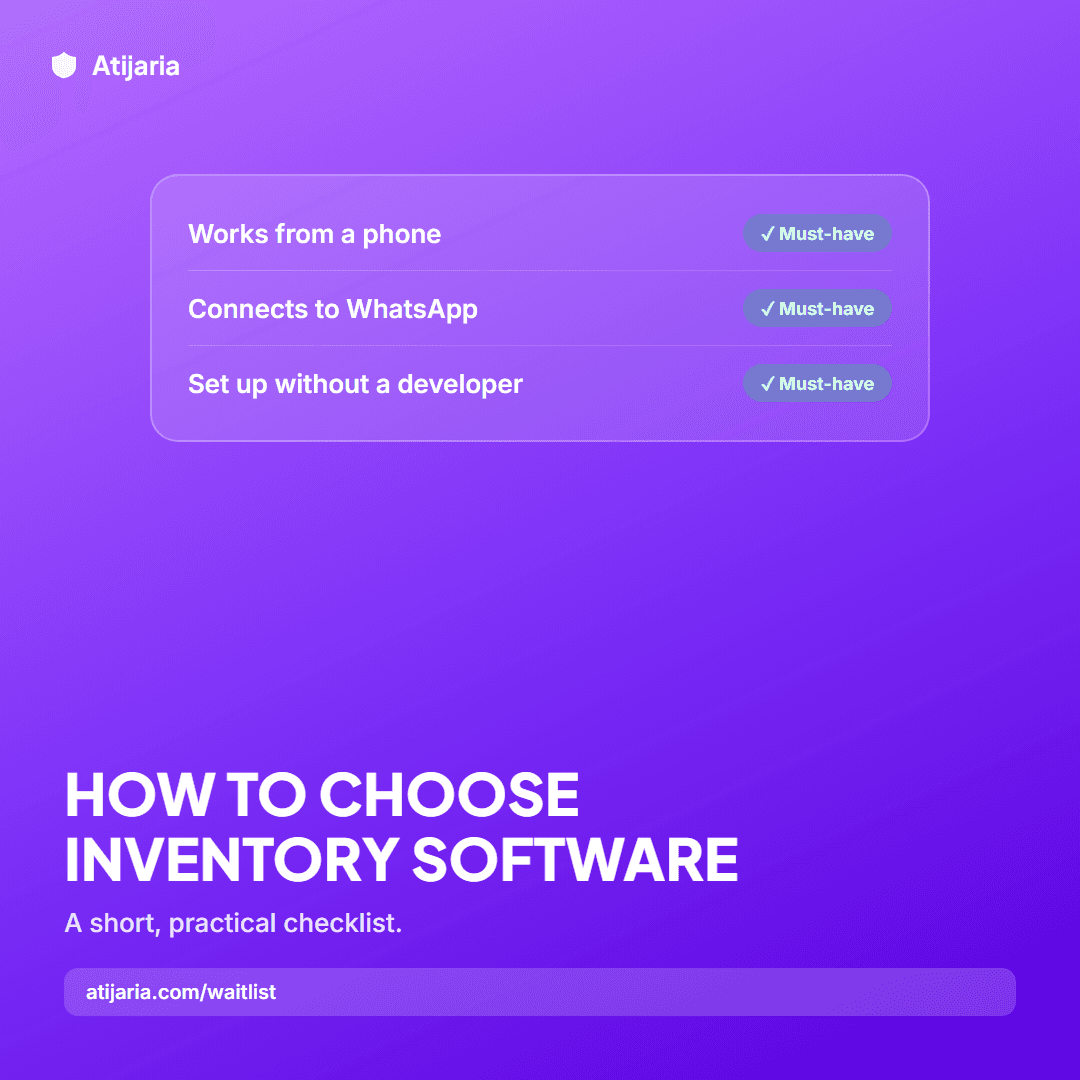
So when you're comparing options, a short, practical checklist works better than a long feature list: Does it work properly from a phone? Does it connect directly to WhatsApp, not just export a CSV you have to manually turn into a catalogue? Can you set it up yourself, without hiring anyone? Is the pricing transparent and in KES? And does it stay accurate in real time as you sell, without you having to double-check it at the end of the day?
Atijaria was built around exactly that checklist, for fashion and boutique retailers specifically rather than retail in general. Stock updates automatically with every sale. Your inventory turns into a shareable WhatsApp catalogue in a few taps. You can track customers and what they've bought, and see a simple, honest view of what's actually selling — all from your phone, with no developer required to set it up.
We're opening early access to a small group of Founder Retailers before this launches more widely — early access, founder pricing, and a direct line to the team while the product is still being shaped.
Be one of Atijaria's first Founder Retailers
Early access, founder pricing and free onboarding — for a limited number of boutiques.
Join the Founder Retailer Waitlist →Share this post
Same content, ready for every channel — no re-uploading, no rewriting.
Instagram caption
Searching for inventory management software in Kenya? Here's the short version of what actually matters: mobile-first, connects to WhatsApp, no developer needed to set up, priced in KES, and accurate in real time. Most generic, global tools miss most of that list. Atijaria was built around it specifically for fashion and boutique retailers. We're opening early access to a small group of Founder Retailers first.
Facebook copy
If you're searching for "inventory management software Kenya", it usually means notebooks or spreadsheets have stopped being enough. Here's what actually matters when you're comparing options: does it work properly from a phone, does it connect directly to WhatsApp (not just export a spreadsheet), can you set it up yourself without hiring a developer, is the pricing transparent in KES, and does your stock stay accurate in real time as you sell? Most global, generic inventory tools miss most of that list — they're built for warehouses, priced in dollars, and assume you have IT support. Atijaria was built specifically for fashion and boutique retailers in Kenya, around exactly this checklist. We're opening early access to a small group of Founder Retailers before this launches more widely — early access, founder pricing, and a direct line to the team.